


Always Ready
to Help!!!
Kuntal Khasnobish
Sales Representative
RE/MAX Realty Services Inc., Brokerage

Are Home Sellers Under Financial Pressure in Canada? 2026 Housing Market Insights
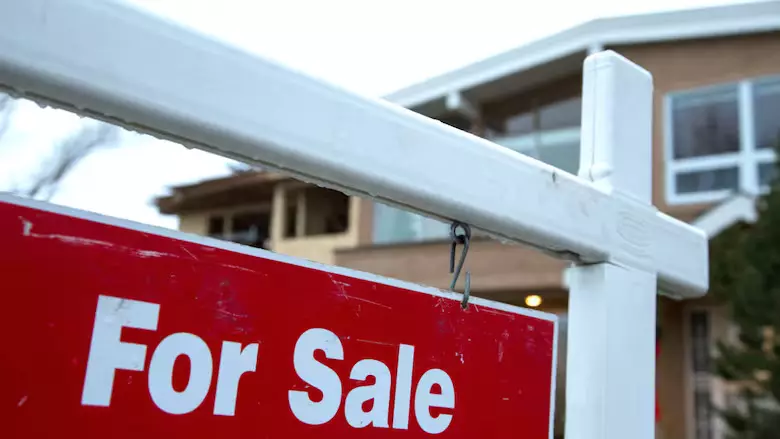
Are Sellers Under Financial Pressure? Why More Canadian Homeowners May Be Considering Selling in 2026
The housing market is changing, mortgage payments remain a concern, and some homeowners are facing difficult financial decisions. But is financial pressure forcing more Canadians to sell their homes?
For years, homeowners benefited from rising property values, historically low borrowing costs and strong housing demand. Today, the picture looks different.
Higher household expenses, mortgage renewals, employment uncertainty, elevated debt levels and declining property values in some markets are creating financial challenges for certain homeowners.
As a result, some sellers are no longer simply selling because they want to upgrade, downsize or relocate. They may be selling because their financial circumstances have changed.
But does this mean Canada is heading toward a wave of distressed property sales?
Let's look at the numbers, the financial pressures facing homeowners and what this could mean for buyers and sellers across the Greater Toronto Area (GTA), Niagara Region and Simcoe County.
1. Are Canadian homeowners really under financial pressure?
The short answer is yes, some are. However, it is important not to assume that every homeowner is struggling.
According to the Bank of Canada's 2026 Financial Stability Report:
-
Canadian household debt remains elevated relative to income.
-
Approximately 1.3% of mortgage holders were more than 60 days late on at least one credit account.
-
Mortgage arrears remain relatively low overall, although certain highly indebted households face greater financial stress.
-
Toronto-area borrowers who purchased in 2022–2023 are among the groups facing greater renewal pressure.
The Bank of Canada also reported that Canadian home prices had declined approximately 5% over the preceding 12 months and 20% from their 2022 peak.
This combination of elevated debt and softer property values can leave some homeowners with less financial flexibility.
The important distinction: Financial pressure does not automatically mean foreclosure or a forced sale. Many homeowners are still managing their mortgage payments, while others may choose to sell before their financial situation becomes more difficult.
Source: Bank of Canada, 2026 Financial Stability Report.
Bank of Canada2. Mortgage renewals are creating difficult decisions
One of the biggest concerns for Canadian homeowners is mortgage renewal.
Many homeowners purchased properties during the low-interest-rate period of 2020 and 2021. Some are now dealing with substantially different borrowing conditions.
Even when interest rates stabilize or decline, homeowners may still face higher payments than they originally budgeted for.
Consider a homeowner who purchased a property with a $700,000 mortgage.
If their monthly mortgage payment increases by several hundred dollars after renewal, that additional expense can affect:
-
Household savings.
-
Retirement contributions.
-
Children's education expenses.
-
Credit card and vehicle payments.
-
Monthly disposable income.
-
Overall financial security.
For some households, refinancing, extending amortization or restructuring debt may provide relief.
For others, selling the property and moving into something more affordable may become a practical financial decision.
According to CMHC's 2026 Residential Mortgage Industry Report, Canada's mortgage arrears rate reached 0.25% in Q1 2026, compared with 0.23% a year earlier.
Although this remains low in historical terms, it indicates that financial pressure deserves attention.
Source: CMHC, August 27, 2026.
CMHC3. Rising household debt is another warning sign
Mortgage payments are only one part of the financial picture.
Canadian households are also dealing with:
-
Credit card balances.
-
Vehicle financing.
-
Personal loans.
-
Lines of credit.
-
Higher insurance premiums.
-
Property taxes.
-
Utilities and maintenance costs.
According to TransUnion, total Canadian consumer debt reached approximately $2.64 trillion in Q2 2026, increasing 4.6% year-over-year.
Mortgage delinquencies remained relatively low, but serious payment delinquencies increased slightly.
This suggests that financial pressure is not distributed equally across Canadian households.
Some homeowners have substantial equity and strong financial reserves. Others have limited savings and may find it difficult to absorb unexpected expenses.
Source: TransUnion, Q2 2026 Credit Industry Insights Report.
TransUnion Newsroom4. What is happening in the GTA real estate market?
The Greater Toronto Area is experiencing a market where buyer confidence, affordability and economic uncertainty are influencing selling decisions.
According to the Toronto Regional Real Estate Board (TRREB), September 2026 recorded:
-
5,040 home sales, down 9% year-over-year.
-
16,500 new listings, down 14.4% year-over-year.
-
Average selling price of $1,006,409, down 5.1% year-over-year.
-
MLS HPI Composite Benchmark, down 4.7% year-over-year.
What does this tell us?
The market is not necessarily experiencing a flood of financially distressed sellers. However, declining prices and slower transactions can make selling more challenging for homeowners who need to move.
For sellers carrying large mortgages, investment properties or multiple properties, holding onto real estate may become more expensive.
Local insight: In Toronto, Mississauga, Brampton, Vaughan and Markham, homeowners who purchased at peak prices may need to reassess their expectations. Some may have to accept a lower selling price than they originally anticipated.
For buyers, this could create opportunities to negotiate with sellers who have a genuine reason to move.
Source: TRREB, September 2026 Market Report.
TRREB+15. Niagara Region: Are homeowners feeling the pressure?
The Niagara Region offers a different affordability picture compared with many GTA communities.
However, declining prices and relatively elevated inventory can create challenges for sellers.
According to the Niagara Association of REALTORS®, September 2026 statistics showed:
|
Market indicator |
September 2026 |
|---|---|
|
Home sales |
525 |
|
Year-over-year sales change |
-1.3% |
|
Average selling price |
$656,045 |
|
Average price change |
-2.2% |
|
Benchmark price |
$567,400 |
|
Benchmark price change |
-4.6% |
|
Active listings |
3,211 |
|
Months of inventory |
6.1 |
What does this mean for Niagara homeowners?
Some sellers may be dealing with declining property values, increased carrying costs and longer selling timelines.
This is particularly relevant for:
-
Investors holding multiple rental properties.
-
Homeowners approaching retirement.
-
Owners with properties requiring expensive renovations.
-
Families carrying substantial mortgage payments.
-
Sellers who purchased during the previous market peak.
Local insight: Communities such as St. Catharines, Niagara Falls, Welland, Thorold and Niagara-on-the-Lake may offer opportunities for buyers who have financing in place and are prepared to negotiate.
However, sellers should understand that pricing incorrectly can result in extended market exposure and further price reductions.
Source: Niagara Association of REALTORS®, September 2026.
CREA Statistics6. Simcoe County: What about Barrie and Angus?
Simcoe County deserves special attention because many homeowners relocated from the GTA during the pandemic housing boom.
Some purchased larger homes, upgraded their lifestyles or invested in properties when borrowing costs were significantly lower.
Today, changing affordability conditions may influence their decisions.
September 2026 market indicators for Barrie and Simcoe County show:
|
Market indicator |
September 2026 |
|---|---|
|
Barrie average price |
$686,941 |
|
Barrie price change |
-2.9% year-over-year |
|
Barrie sales |
130 |
|
Barrie sales change |
-29.9% |
|
Simcoe County average price |
$768,850 |
|
Simcoe County price change |
-2.9% |
|
Simcoe County active listings |
4,305 |
|
Simcoe County inventory |
7.05 months |
Source: September 2026 market insights compiled from TRREB and CREA statistics.
Ed TracyWhat could this mean locally?
In Barrie, Angus, Innisfil, Essa, Bradford and surrounding communities, some homeowners may be reconsidering their housing expenses.
For example:
-
Families who purchased larger detached homes may consider downsizing.
-
Investors may reconsider holding rental properties.
-
Retirees may want to unlock home equity.
-
Homeowners facing mortgage renewals may consider moving to a less expensive property.
-
Families relocating for employment may need to sell sooner than originally planned.
In Barrie, the September median sold price was reported at $635,000, down 6% from September 2025, according to a separate local market compilation.
The key message is that sellers need to understand their property's current market value rather than relying on what neighbouring properties sold for during the pandemic boom.
Valery7. Five signs a homeowner may be considering selling because of financial pressure
Not every seller will openly discuss their financial circumstances. However, there are situations that may indicate a homeowner is reassessing their financial position.
1. Repeated price reductions
A property that has been listed for several weeks with multiple price reductions may indicate that the seller needs to generate buyer interest.
2. Vacant investment properties
Investors dealing with mortgage payments, maintenance costs, property taxes and insurance may reconsider whether holding a vacant property makes financial sense.
3. Downsizing to reduce expenses
Some homeowners may sell a larger property to reduce mortgage payments, utility costs and maintenance expenses.
4. Selling before mortgage renewal
Homeowners anticipating a substantial increase in mortgage payments may explore selling before their renewal date.
5. Relocation due to employment changes
Job losses, reduced income or employment relocation can force families to reconsider their housing arrangements.
These are potential indicators, not proof of financial distress. A seller's motivation should never be assumed based solely on listing activity.
8. Are we heading towards more distressed property sales in Canada?
This is perhaps the biggest question for buyers and sellers.
Although there are signs of increasing financial pressure among certain households, current statistics do not suggest that most Canadian homeowners are being forced to sell.
The Bank of Canada reports that overall household financial stress has remained broadly stable, and mortgage arrears remain relatively low.
However, the situation could change if unemployment increases, household incomes weaken or borrowing costs rise unexpectedly.
The Office of the Superintendent of Bankruptcy also reported that consumer insolvencies increased 5.4% over the 12 months ending July 2026 compared with the preceding 12-month period.
This is another indicator worth monitoring, although insolvency statistics do not directly measure forced home sales.
Source: Government of Canada, July 2026 Insolvency Statistics.
ISED Canada+1My expectation is that financially motivated sales could become more visible in certain property segments and price ranges, particularly where owners have high debt and limited financial flexibility.
But this should not be confused with a nationwide housing collapse.
9. What should sellers do if they are under financial pressure?
If you are considering selling because of increasing expenses or mortgage payments, making a decision early can provide more options.
Here are six practical steps:
-
Understand your current property value: Get a realistic comparative market analysis based on recent sales.
-
Calculate your mortgage payout: Understand your remaining mortgage balance, discharge fees and potential penalties.
-
Review your equity: Calculate what you could realistically walk away with after selling expenses.
-
Consider alternative housing options: Downsizing, relocating or purchasing a more affordable property may reduce your monthly expenses.
-
Avoid emotional pricing: Today's buyers are more price-sensitive, and overpricing can cost sellers valuable time.
-
Speak with your mortgage professional: Explore refinancing, renewal options and other financial alternatives before making a decision.
Remember, selling a property without understanding your mortgage obligations and net proceeds can create additional financial problems.
10. Is this a good opportunity for buyers?
Potentially, yes!
A market where some sellers are under pressure can create opportunities for well-prepared buyers.
However, buyers should not assume that every seller is desperate or willing to accept a substantially lower offer.
Here are some strategies worth considering:
-
Look for properties with multiple price reductions.
-
Monitor listings that have been sitting on the market.
-
Consider properties that need cosmetic improvements.
-
Negotiate favourable closing dates.
-
Include appropriate financing and inspection conditions.
-
Research comparable sales before submitting an offer.
In markets such as Barrie, Angus, Brampton, Mississauga, St. Catharines and Niagara Falls, buyers may find opportunities by focusing on correctly priced properties and understanding individual seller circumstances.
A motivated seller does not automatically mean a good investment. Location, property condition, future resale potential and affordability still matter.
Final thoughts: Are sellers under financial pressure?
The Canadian housing market is entering a period where financial flexibility matters more than ever.
Mortgage renewals, household debt, employment uncertainty and declining property values are creating difficult decisions for some homeowners.
While the majority of Canadian mortgage holders are still managing their payments, certain homeowners may choose to sell rather than continue carrying a financial burden.
For sellers, understanding your current market value and available options is essential.
For buyers, this could be an opportunity to negotiate better terms and find properties that fit their financial goals.
The biggest opportunity in today's real estate market may not be finding the cheapest property. It may be finding the right property from a seller whose circumstances create room for negotiation.
If you are thinking about buying or selling in Barrie, Angus, Simcoe County, Niagara Region or the GTA, understanding the numbers before making a move can make a significant difference.
#CanadianRealEstate #OntarioRealEstate #GTARRealEstate #BarrieRealEstate #AngusOntario #SimcoeCountyRealEstate #NiagaraRealEstate #MotivatedSellers #MortgageRenewal #HousingMarket2026 #HomeSellingTips #FirstTimeHomeBuyers #RealEstateMarketUpdate #OntarioHousingMarket #RealEstateInsights