


Always Ready
to Help!!!
Kuntal Khasnobish
Sales Representative
RE/MAX Realty Services Inc., Brokerage

How the Bank of Canada’s Rate Increase Could Impact Home Prices and Sales in the GTA, Niagara Region and Simcoe County
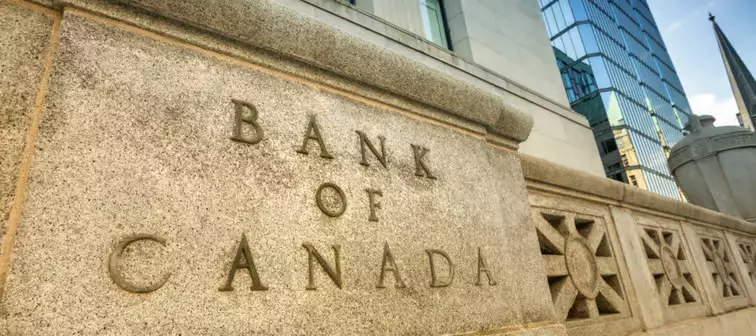
How the Bank of Canada’s Rate Increase Could Impact Home Prices and Sales in the GTA, Niagara Region and Simcoe County
The rate hike is here. What happens to Ontario real estate now?
The Bank of Canada has just delivered a significant message to Canadian homebuyers and homeowners.
On October 28, 2026, the Bank raised its overnight policy rate by 0.25 percentage points, from 2.25% to 2.50%. The decision followed persistent inflation pressures, higher energy prices and stronger-than-expected economic growth. The Bank also indicated that further increases could be necessary, depending on how economic conditions develop.
Bank of Canada+1For Ontario's housing market, the timing matters.
Home sales were already under pressure before this latest rate increase. Buyers were weighing affordability, economic uncertainty and borrowing costs, while sellers were adjusting their price expectations.
Now the big question is: Could this rate hike push home prices lower—or could it create an opportunity for buyers who have been waiting on the sidelines?
The answer may look different in Toronto, Mississauga, Brampton, Niagara Falls, St. Catharines, Barrie and Angus.
Let's look at the numbers and what they could mean for your next real estate decision.
1. What exactly did the Bank of Canada do?
The Bank of Canada's policy rate influences short-term borrowing costs throughout the economy. It is not the same as the mortgage rate offered by a bank, but it can affect the cost of certain mortgages and other loans.
Here is the latest policy-rate timeline:
|
Announcement date |
Overnight policy rate |
|---|---|
|
October 29, 2025 |
2.25% |
|
September 2, 2026 |
2.25% |
|
October 28, 2026 |
2.50% |
The latest decision represents a 25-basis-point increase, following a period when the policy rate had remained at 2.25%.
Bank of CanadaWhy did the Bank raise rates?
The Bank reported that Canadian inflation had been around 3% since April 2026 and was expected to rise to approximately 3.5% by the end of the year. Higher energy costs and the risk that businesses would pass increased expenses on to consumers were important considerations.
Bank of Canada+1What this means for real estate: borrowing costs may become less favourable for some buyers, while uncertainty about future rates could cause other buyers to delay their purchase.
However, a rate increase does not automatically mean that home prices will crash.
2. GTA real estate: Could home prices face more pressure?
The Greater Toronto Area is particularly sensitive to mortgage affordability because home prices are relatively high and many buyers depend on financing.
The latest available September 2026 figures from the Toronto Regional Real Estate Board (TRREB) reveal a market already experiencing softer activity.
GTA housing market: September 2026
Home sales: 5,040. Down 9% year over year
Average selling price: $1,006,409. Down 5.1% year over year
New listings:16,500 Down 14.4% year over year.
Benchmark price: -4.7% Year-over-year change
These figures tell us three important things.
First, buyers were already cautious before the latest rate increase. Second, the average selling price was lower than a year earlier. Third, new listings had also fallen, so the market was not simply experiencing an unlimited increase in available properties.
How could the rate increase affect Toronto and surrounding cities?
Toronto: Condominiums and properties with higher monthly carrying costs could face additional affordability pressure if buyers become more cautious. Sellers may need to compete more aggressively on price, condition and presentation.
Mississauga and Brampton: Buyers comparing detached homes, townhouses and condominiums may become more selective. Properties priced realistically against recent comparable sales could attract more attention than those listed using last year's expectations.
Vaughan, Markham and Richmond Hill: Higher-priced properties may face a smaller pool of qualified buyers because even a modest change in financing costs can make a meaningful difference to monthly budgets.
Important insight: A rate increase could reduce the number of active buyers without producing an immediate, uniform decline in every property's value. Local supply, property type, location and seller motivation still matter.
For buyers, that may mean more negotiating room. For sellers, it means pricing based on current market evidence rather than assuming prices will quickly return to previous peaks.
3. Niagara Region: Could affordability attract more buyers?
Niagara has a different housing profile from the GTA. Its mix of detached homes, townhouses, condominiums and smaller communities attracts local households, retirees, investors and buyers looking beyond Toronto's price levels.
But lower prices do not make Niagara immune to interest rate increases.
According to the Niagara Association of REALTORS®, September 2026 market figures show that prices remained below year-earlier levels.
CREA Statistics+1Niagara housing market: September 2026
Home sales: 525. Down 1.3% year over year
Benchmark price: $567,400 Down 4.6% year over year
Average selling price: $656,045 Down 2.2% year over year
Active listings: 3,211. Down 17% year over year
Source: Niagara Association of REALTORS® September 2026 statistics.
Notice something interesting: Niagara's benchmark price was down 4.6%, but sales were down only 1.3% year over year.
This suggests that the market's price movement and sales activity are not changing at exactly the same pace. It also shows why buyers and sellers should examine several indicators instead of relying on a single headline.
Local insights: Where could the impact be felt?
-
St. Catharines: Buyers comparing detached homes, townhouses and condominiums may become more price-sensitive as financing costs rise.
-
Niagara Falls: Investors and buyers considering rental properties will need to pay closer attention to financing expenses, rental income and ongoing maintenance costs.
-
Welland and Port Colborne: Buyers seeking comparatively affordable homeownership may continue to find options, but qualification and monthly affordability remain important.
-
Grimsby and Lincoln: Buyers weighing Niagara against the western GTA may compare commute times, property taxes, housing type and total ownership costs before deciding where to purchase.
The latest rate increase could make some Niagara buyers more cautious, especially those who are already close to their maximum mortgage qualification.
However, Niagara's lower benchmark prices relative to the GTA may continue to attract households looking for more affordable alternatives.
What sellers should know: A lower asking price alone will not guarantee a quick sale. Condition, property type, neighbourhood competition and realistic pricing remain important.
4. Simcoe County: What about Barrie, Angus and surrounding communities?
Simcoe County deserves particular attention because it attracts buyers who want more space, a different lifestyle or an alternative to higher-priced GTA housing.
But when borrowing costs rise, buyers considering communities such as Barrie, Angus, Innisfil, Bradford and Orillia may reconsider their budgets.
TRREB's August 2026 Simcoe County figures provide useful context for the market entering the fall.
Simcoe County housing market: August 2026
Home sales: 657. Up 1.1% year over year
Average selling price: $746,303. Down 6.2% year over year
New listings: 1,827. Down 11.7% year over year
Active listings: 4,326 Down 6.3% year over year
Source: TRREB Simcoe County Market Watch, August 2026 figures, reported in a local market analysis. These are August figures, not October results. Kimberly Schroeder, REALTOR®
These numbers tell an interesting story. Sales increased slightly from a year earlier, even as the average selling price declined. Meanwhile, new and active listings also decreased.
This means Simcoe County was not experiencing a simple, uniform market decline. Buyers were still purchasing homes, but average prices were lower and the available supply was changing.
What could happen in Barrie?
Barrie offers a range of housing options, from condominiums and townhouses to detached family homes.
A higher policy rate could:
-
Make some buyers more cautious about stretching their budgets.
-
Increase the importance of mortgage pre-approval and payment planning.
-
Give buyers more leverage on properties that have been listed for an extended period.
-
Put additional pressure on sellers whose asking prices are above comparable recent sales.
The effect will likely vary by property type and neighbourhood.
What about Angus and Essa Township?
For buyers looking in Angus and nearby communities, the decision often involves balancing purchase price, commuting costs, household space and access to services.
If mortgage costs rise, some buyers may choose a smaller property, increase their down payment or delay purchasing until their finances are stronger.
Others may still move forward if they find a home that meets their long-term needs and fits comfortably within their budget.
For sellers, the lesson is straightforward: understand your immediate competition and price your home for today's buyers, not yesterday's market.
Important: Simcoe County's August statistics should not be treated as proof of what happened after the October rate increase. The next monthly market reports will help reveal how sales, listings and prices respond.
5. How much difference could a 0.25% rate increase make to mortgage payments?
Let's put the rate change into practical terms.
A quarter-percentage-point increase may sound small, but its effect can add up over the life of a mortgage.
For an illustrative comparison, assume a $500,000 mortgage with 25 years remaining on the amortization.
|
Illustrative mortgage rate |
Approx. monthly payment |
|---|---|
|
4.00% |
$2,630 |
|
4.25% |
$2,702 |
|
Difference |
About $72/month |
Illustrative principal-and-interest payments, calculated using standard Canadian mortgage payment conventions with a nominal annual rate compounded semi-annually. Actual lender rates, payment schedules and mortgage terms vary.
That is approximately $864 more per year if the higher rate applies for the full period.
However, this is an illustration of a mortgage rate changing by 0.25 percentage points—not a prediction that every mortgage rate will rise by exactly that amount.
The Bank of Canada's policy rate and a lender's mortgage rate are different things.
- Variable-rate mortgages: These are generally linked to a lender's prime rate, so the October increase puts upward pressure on borrowing costs for many variable-rate borrowers.
- Fixed-rate mortgages: These are influenced more directly by bond yields and lender pricing. They do not automatically rise by the same amount when the Bank changes its overnight rate.
- Existing fixed-rate mortgages: Borrowers generally retain their contracted rate until renewal, unless their mortgage terms provide otherwise.
Ratehub's October 28 analysis also noted that the policy-rate increase was expected to raise variable mortgage rates, while fixed mortgage rates would continue to depend on bond-market conditions.
Ratehub.ca+1For a buyer deciding between a $600,000 property and a $700,000 property, the bigger question is not simply whether rates rise by 0.25%.
It is whether the total monthly housing cost remains manageable after accounting for property taxes, utilities, insurance, maintenance and other debts.
6. Will home prices fall further after the rate increase?
This is the question many buyers and sellers want answered.
The honest answer is that further price declines are possible, but the October rate increase alone cannot tell us how far prices may move.
Several factors will determine the outcome.
Factor 1: Mortgage affordability
Higher borrowing costs can reduce the amount buyers qualify for or are comfortable borrowing. That can limit competition for certain properties and put pressure on prices.
Factor 2: Employment and consumer confidence
A household may qualify for a mortgage but still decide not to purchase if it is worried about job security, trade uncertainty or rising everyday expenses.
Factor 3: Housing inventory
If the number of available homes falls significantly, the pressure on prices may be reduced in some neighbourhoods.
The GTA's September figures showed new listings down 14.4% year over year, while Niagara's active listings were down 17%.
Factor 4: Pent-up buyer demand
Some households have delayed purchasing while waiting for lower prices or more certainty about interest rates.
If these buyers return to the market, competition could strengthen for desirable homes even if borrowing costs remain higher.
Factor 5: Local market conditions
A condominium in downtown Toronto, a detached home in Brampton, a family property in Barrie and a home in Angus may respond differently to the same national interest-rate decision.
That is why a single Ontario-wide prediction can be misleading.
7. Is this a buyer's market—or a warning sign for sellers?
For many buyers, a softer market can create opportunities.
You may have more time to compare properties, negotiate conditions and investigate homes that would have attracted intense competition in a stronger market.
But lower prices do not automatically mean a property is affordable. Mortgage qualification and the ability to manage payments over time remain essential.
For sellers, the latest rate increase makes realistic pricing and preparation even more important.
A seller who needs to move may have to make a sharper pricing decision than one who can afford to wait. Sellers should also consider the cost of carrying their current home while searching for a new one.
For investors, the focus should be on cash flow, financing terms, realistic rental income and the possibility of extended vacancies—not simply the expectation that property values will eventually rise.
8. What should buyers do now?
If you are planning to purchase a home in the GTA, Niagara Region or Simcoe County, consider these practical steps:
-
Review your mortgage pre-approval. Ask your mortgage professional how the new rate environment affects your borrowing capacity.
-
Calculate your comfortable budget. Do not rely solely on the maximum mortgage amount a lender will approve.
-
Compare neighbourhoods. A change in location or property type may offer better value without compromising your essential needs.
-
Look beyond the asking price. Review recent comparable sales, property condition, monthly ownership costs and potential repairs.
-
Keep a financial buffer. Avoid using every available dollar for the down payment and closing costs.
-
Negotiate strategically. Consider conditions, closing dates and inspection findings alongside price.
-
Think long term. If you plan to live in the property for several years, evaluate whether the home suits your needs and budget rather than attempting to predict the exact bottom of the market.
9. What should sellers do now?
If you are considering selling in Toronto, Mississauga, Brampton, Niagara, Barrie or Angus, take a different approach.
-
Review the most recent comparable sales in your immediate neighbourhood.
-
Assess competing listings and how long they have been on the market.
-
Complete inexpensive repairs and improve presentation before listing.
-
Set a pricing strategy that reflects current buyer expectations.
-
Discuss timing with your real estate professional, particularly if you also need to purchase another home.
-
Avoid relying on national headlines when making decisions about your specific property.
The right strategy depends on your property, your financial circumstances and your moving timeline.
10. My outlook for the GTA, Niagara Region and Simcoe County
The October 28 rate increase introduces another affordability challenge at a time when the housing market in these regions is already adjusting.
My assessment is that the immediate effect is more likely to appear through buyer caution, mortgage-payment pressure and slower decision-making than through a guaranteed, sudden collapse in home prices.
The GTA may remain particularly sensitive to affordability because of its higher purchase prices. Niagara could continue to appeal to buyers looking for comparatively lower-cost alternatives. Simcoe County may attract households seeking space and lifestyle changes, although financing costs could affect their budgets too.
These are market scenarios, not guaranteed outcomes. Future interest-rate decisions, employment conditions, inflation and local housing supply will influence what happens next.
The Bank of Canada's next scheduled policy-rate announcement is December 9, 2026.
That announcement, together with the upcoming housing-market reports, should provide more evidence about whether this rate increase marks the beginning of a longer tightening period or a more limited adjustment.
Final takeaway: Should you buy or sell now?
The Bank of Canada's rate increase is a reason to review your plans—not necessarily a reason to abandon them.
If you are a buyer, focus on affordability, financing and negotiating opportunities.
If you are a seller, focus on pricing, presentation and the competition in your neighbourhood.
If you are an investor, assess cash flow and financing risks carefully.
The most important question is not whether the market will rise or fall by a certain percentage. It is whether the decision makes sense for your financial situation and your long-term goals.
Thinking about buying or selling in the GTA, Niagara Region, Barrie or Angus? Review the numbers for your specific neighbourhood before making your next move.
Disclaimer: This article is for general educational purposes and is not mortgage, legal or financial advice. Market statistics cover different reporting periods as identified above. Mortgage costs and future home prices will vary according to lender terms, property type, location and changing economic conditions.
#BankOfCanada #InterestRateHike #CanadianRealEstate #GTARRealEstate realEstate #GTAMarketUpdate #OntarioRealEstate #NiagaraRealEstate #SimcoeCountyRealEstate #BarrieRealEstate #AngusOntario #HomeBuyersCanada #HomeSellersCanada #MortgageRatesCanada #HousingMarket2026 #RealEstateMarketUpdate