


Always Ready
to Help!!!
Kuntal Khasnobish
Sales Representative
RE/MAX Realty Services Inc., Brokerage

Was It Necessary for the Bank of Canada to Increase the Overnight Rate?
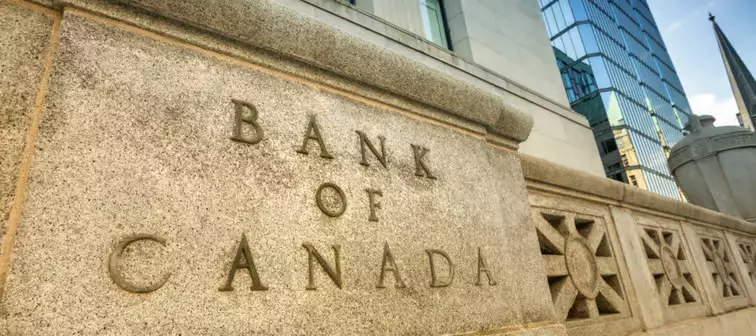
Was It Necessary for the Bank of Canada to Increase the Overnight Rate?
The 25-Basis-Point Question Every Canadian Is Asking
The Bank of Canada has increased its overnight rate by 25 basis points, from 2.25% to 2.50%.
For Canadians already dealing with expensive groceries, higher fuel prices, mortgage renewals and housing affordability challenges, the immediate question is obvious:
Was another interest-rate increase really necessary?
The answer isn't completely black and white.
The Bank of Canada had legitimate reasons to act. Inflation had remained stubbornly elevated, energy costs were rising and policymakers were increasingly concerned that higher business costs could spread through the broader economy.
But there was also a strong argument for waiting.
The labour market still showed weakness, unemployment was around 6.5%, the economy continued to face uncertainty from trade tensions, and Canada's housing market remained relatively subdued.
So, did the Bank of Canada make the right move?
Let's break it down.
What Did the Bank of Canada Do?
On October 28, 2026, the Bank of Canada increased its target for the overnight rate by 0.25 percentage points to 2.50%.
This was a significant change because the Bank had previously maintained the rate at 2.25%.
The Bank's main concern was not simply today's inflation number.
Its bigger concern was this:
Could higher energy and business costs become permanently embedded throughout the Canadian economy?
That distinction is extremely important.
The Bank of Canada cannot produce more oil, eliminate geopolitical conflicts or directly reduce global energy prices.
But it can try to prevent temporary cost increases from becoming a broader cycle of rising prices.
According to the Bank's October outlook:
-
CPI inflation was approximately 3.1% in September
-
Inflation had been around 3% since April
-
Inflation was expected to rise to approximately 3.5% by the end of 2026
-
Excluding gasoline, inflation was approximately 2.2%
-
Core inflation measures remained close to the Bank's 2% target
This is where the debate begins.
Why the Bank of Canada Believed a Rate Increase Was Necessary
1. Inflation Was Moving in the Wrong Direction
Canada's inflation problem was no longer comfortably sitting at the Bank of Canada's 2% target.
Higher oil and energy prices were creating significant pressure throughout the economy.
When energy becomes more expensive, the impact doesn't stop at the gas station.
Higher energy costs can increase:
-
Transportation costs
-
Manufacturing costs
-
Delivery costs
-
Construction costs
-
Business operating expenses
-
Travel costs
Eventually, businesses may begin passing those higher costs on to consumers.
That is exactly what concerned the Bank of Canada.
The central bank noted that while many businesses had absorbed higher costs so far, surveys suggested that more businesses expected to pass those costs on to customers over the coming year.
2. The Bank Wanted to Prevent Inflation From Spreading
This may have been the strongest argument for increasing the overnight rate.
The Bank wasn't necessarily reacting only to what inflation had already done.
It was trying to prevent what inflation might do next.
Energy-driven inflation can sometimes be temporary.
However, if businesses begin increasing prices more broadly and workers begin expecting permanently higher inflation, inflation can become much harder to control.
The Bank of Canada was concerned about:
Higher energy prices -> higher business costs -> higher consumer prices -> rising inflation expectations
Once that cycle becomes entrenched, the Bank could potentially be forced to increase rates much more aggressively later.
From that perspective, a modest 0.25% increase now could be viewed as an attempt to avoid larger increases later.
But Was There a Strong Argument for Keeping Rates Unchanged?
Absolutely.
And this is why the October 2026 decision remains controversial.
1. Core Inflation Was Still Relatively Controlled
One of the biggest arguments against increasing rates was that the underlying inflation picture looked much less alarming than the headline CPI number.
Headline inflation was around 3.1%, but excluding gasoline, inflation was approximately 2.2%.
Core inflation measures were also close to the Bank's 2% target.
That raises an important question:
Should Canadians pay higher borrowing costs because of an energy shock that interest-rate increases cannot directly fix?
Higher interest rates cannot produce more oil.
They cannot reopen disrupted supply routes.
They cannot directly reduce global refinery margins.
Critics of the increase argue that raising interest rates could weaken Canadian consumers and businesses without doing much to solve the original energy problem.
2. Canada's Labour Market Was Still Showing Weakness
Another major concern was employment.
The Bank of Canada's own analysis indicated that:
-
Employment was roughly unchanged since the beginning of the year
-
Finding work remained difficult
-
Unemployment hovered around 6.5%
-
Long-term unemployment remained elevated
-
Job vacancies remained subdued
In other words, Canada was not experiencing an obviously overheated labour market.
There was still evidence of excess capacity in the economy.
Normally, these conditions would make a central bank cautious about raising interest rates.
The Bank itself estimated that the economy still had some slack.
So critics reasonably asked:
Why increase borrowing costs when many Canadians are already struggling to find work?
The Housing Market Complication
For Canadian real estate, the timing of a rate increase creates another challenge.
The Bank of Canada itself expected housing activity to remain relatively weak.
Ontario's broader housing outlook also remained soft in 2026, with economic uncertainty and affordability pressures weighing on demand.
The Ontario government projected:
-
Ontario home resales could decline 0.7% in 2026
-
Average resale prices could decline 2.4% in 2026
-
A stronger recovery was expected beginning in 2027
This means the Bank was raising rates at a time when housing was already under pressure.
What Does the Rate Increase Mean for Canadian Homeowners?
Variable-Rate Mortgage Holders Could Feel It First
The most immediate impact is likely to be felt by Canadians with:
-
Variable-rate mortgages
-
Home equity lines of credit
-
Other borrowing tied to lenders' prime rates
As lenders adjust their prime rates, borrowing costs can increase.
Depending on the mortgage structure, homeowners may experience:
-
Higher monthly payments
-
More of their payment going toward interest
-
Longer effective amortization periods
For someone already facing a mortgage renewal or affordability challenges, even a 0.25% increase can matter.
The impact is especially significant when combined with higher fixed mortgage rates and other rising household expenses.
What About Fixed Mortgage Rates?
This is where many buyers get confused.
The Bank of Canada overnight rate does not directly determine fixed mortgage rates.
Fixed mortgage rates are influenced more heavily by:
-
Government bond yields
-
Financial-market expectations
-
Inflation expectations
-
Lenders' funding costs
However, the Bank of Canada's decision can influence market expectations.
If investors believe more rate increases are coming, bond yields and fixed borrowing costs may remain elevated.
That means a homebuyer shouldn't assume that avoiding a variable mortgage automatically means they are unaffected by the Bank's decision.
Local Impact: GTA Real Estate
The GTA could feel the impact differently depending on the property type.
GTA Condos
The condo market remains particularly sensitive to affordability.
Higher borrowing costs can affect:
-
First-time buyers
-
Investors
-
Buyers qualifying for mortgages
-
Condo owners facing renewals
A further increase in financing costs could slow demand, especially in price-sensitive segments.
GTA Freehold Homes
Detached and freehold markets may be more resilient in established neighbourhoods, but affordability remains a major issue.
Higher rates reduce purchasing power.
Even if prices do not immediately fall, buyers may simply be able to qualify for less.
That can limit how quickly prices recover.
Local Impact: Barrie, Angus and Simcoe County
For buyers in Barrie, Angus and Simcoe County, the story is slightly different.
These markets continue to attract buyers looking for more space and relative affordability compared with Toronto.
But many buyers in Simcoe County depend on mortgage financing.
A higher overnight rate can:
-
Reduce borrowing capacity
-
Increase variable-rate payments
-
Make first-time buyers more cautious
-
Slow move-up buyer activity
At the same time, softer demand can create opportunities.
Buyers may find:
-
More time to make decisions
-
Better negotiating conditions
-
Less intense competition
-
Greater flexibility on price and conditions
For well-qualified buyers, a slower market can sometimes be an opportunity rather than a disaster.
Local Impact: Niagara Region
Niagara has a unique mix of:
-
End users
-
Retirees
-
Investors
-
GTA relocation buyers
Higher rates can affect each group differently.
Investors may become more cautious if financing costs rise.
First-time buyers may see affordability challenges increase.
However, buyers purchasing with substantial equity or cash may have more negotiating power in a slower market.
The biggest challenge for Niagara, as with other Ontario markets, is confidence.
People don't buy homes only when rates are low.
They buy when they feel confident about:
-
Their job
-
Their income
-
The economy
-
Future housing prices
A rate increase can temporarily weaken that confidence.
The Biggest Question: Did the Bank Act Too Early?
There is a reasonable argument that the Bank of Canada could have waited.
After all:
-
Core inflation was close to target
-
Employment remained weak
-
Unemployment was around 6.5%
-
The housing market was subdued
-
Trade uncertainty remained significant
But the Bank was worried about the future, not just the present.
Its forecast suggested inflation could remain elevated for longer than previously expected.
The Bank projected inflation could average approximately 3% in 2027 before returning toward its 2% target around the middle of 2028.
From the Bank's perspective, waiting too long could have created a bigger problem later.
My Take: Necessary, But the Bank Must Be Extremely Careful
In my opinion, the 0.25% increase was understandable—but further increases should not be automatic.
The Bank of Canada had a legitimate concern.
Persistent energy costs can eventually spread throughout the economy and create broader inflation.
Ignoring that risk could be dangerous.
However, Canada's economy is not clearly overheating.
The labour market still has weaknesses.
Housing remains subdued.
Trade uncertainty remains significant.
That means the Bank needs to take a meeting-by-meeting approach.
A small increase may help demonstrate that the Bank remains serious about controlling inflation.
But multiple aggressive increases could create unnecessary pressure on:
-
Homeowners
-
Mortgage borrowers
-
Small businesses
-
Job seekers
-
The housing market
The next few months will be crucial.
What Should Buyers and Sellers Do Now?
If You're Buying
Don't make a decision based solely on whether the Bank increases or decreases rates by 0.25%.
Instead, focus on:
-
Your monthly affordability
-
Your mortgage qualification
-
Your employment stability
-
The specific local market
-
Negotiating opportunities
In some markets, a slower housing environment can create better buying opportunities even when borrowing costs are slightly higher.
If You're Selling
Pricing strategy is becoming increasingly important.
Sellers can no longer simply assume that a future rate cut will automatically bring a flood of buyers.
Buyers remain sensitive to affordability.
A properly priced home with strong marketing can still attract serious buyers.
An overpriced listing may simply sit.
The Bottom Line
Was it necessary for the Bank of Canada to increase the overnight rate?
There is a strong argument on both sides.
YES—because:
- Inflation remained above target
- Energy costs were increasing
- Business cost pressures were building
- The Bank wanted to prevent inflation from spreading
- Inflation expectations were becoming a greater concern
MAYBE NOT—because:
- Core inflation remained close to target
- Unemployment was around 6.5%
- Employment growth was weak
- The housing market remained subdued
- Trade uncertainty could weaken economic growth
The Bank of Canada chose to act early rather than risk waiting too long.
Now comes the bigger question:
Will one 0.25% increase be enough—or will Canadians face more rate hikes ahead?
For the GTA, Barrie, Angus, Simcoe County and Niagara Region, the answer will have a major impact on buyer confidence, mortgage affordability and the speed of the next real estate recovery.
Note: This article is for general informational purposes only and should not be considered financial, mortgage, investment or legal advice. Speak with a qualified mortgage or financial professional regarding your specific situation.
#BankOfCanada #InterestRates #MortgageRates #CanadianRealEstate #CanadaHousing #RealEstateCanada #GTARealEstate #TorontoRealEstate #BarrieRealEstate #AngusOntario #SimcoeCountyRealEstate #NiagaraRealEstate #HomeBuyersCanada #HousingMarket #CanadaEconomy