
Should You Buy a House in the Middle of a Trade War?
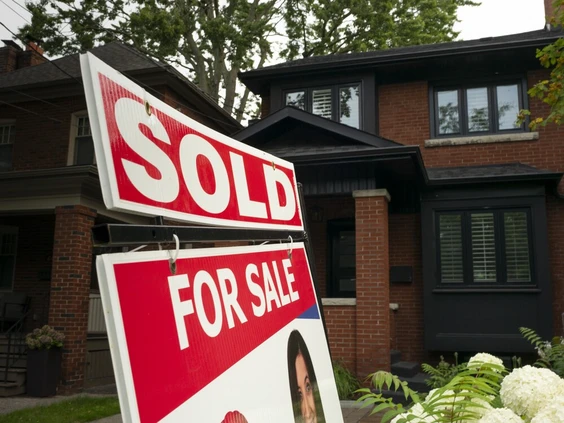
Should You Buy a House in the Middle of a Trade War?
What happens to home prices when tariffs rise, construction gets more expensive and buyers become nervous?
That is the question many Canadians are asking in September 2026.
The Canada–U.S. trade dispute has created another layer of uncertainty for an already cautious housing market. Canada announced new counter-tariffs effective September 8 covering $27.6 billion of U.S. imports, including products such as steel, appliances, agricultural equipment and electronics.
At the same time, the Bank of Canada is watching the potential inflationary effects of tariffs while keeping its policy rate at 2.25% as of September 2.
So, does a trade war mean "don't buy a house"?
Not necessarily.
But it does mean buyers need to look beyond the headline home price.
1. The Trade War Can Affect Housing in More Ways Than One
When people hear "tariffs," they often think about cars, steel or manufactured goods.
But housing is connected to the broader economy.
Tariffs can affect:
- Building materials
- Construction costs
- Appliances
- Renovation costs
- Business investment
- Employment
- Inflation
- Mortgage rates
- Consumer confidence
And some of those effects are already showing up in Ontario's construction industry.
A September 2026 analysis from the Residential Construction Council of Ontario estimates that the latest counter-tariffs could add approximately $9,000–$14,000 to a typical Ontario single-detached home's construction cost and $18,000–$28,000 to a mid-rise unit, on top of earlier tariff-related costs.
What does this mean for buyers?
It doesn't automatically mean resale prices will increase by the same amount.
Instead, it creates another potential pressure on new-home supply and construction economics.
If construction becomes more expensive, some projects may become harder to justify financially.
That matters in a market where Canada already needs substantial new housing supply.
2. GTA Prices Are Lower — But Buyers Are Still Hesitating
Here's where the situation gets interesting.
The GTA isn't experiencing a traditional "prices are crashing, everyone is buying" scenario.
According to CREA/TRREB data, the GTA recorded 5,057 home sales in August 2026, down 2.1% from August 2025.
The average selling price was $993,410, down 2.7% year over year, while the MLS HPI Composite benchmark was down 4.5%.
But something else happened:
New listings fell 14.1% year over year.
That means there are fewer homes coming onto the market even while buyers remain cautious.
This creates an unusual market:
Lower prices + fewer listings + cautious buyers + economic uncertainty.
That's very different from simply saying "the market is going down."
3. Interest Rates Could Be More Important Than the Trade War
This is one of the biggest factors buyers should watch.
The Bank of Canada held its overnight rate at 2.25% on September 2, 2026.
But the Bank specifically noted that tariffs and Canadian counter-tariffs could increase business costs and eventually feed into consumer prices. It also said the new tariffs make the growth outlook more uncertain.
Meanwhile, CREA reported in September that fixed mortgage rates had already increased because of higher bond yields, while markets were pricing in the possibility of a variable-rate increase.
That creates an important distinction:
A lower house price doesn't necessarily mean a lower monthly payment.
For example, imagine:
Home A: $900,000 at a lower mortgage rate
versus
Home B: $850,000 at a higher mortgage rate.
The cheaper house isn't automatically the cheaper home to own.
Buyers should compare:
Purchase price + mortgage rate + property taxes + insurance + maintenance + closing costs
—not just the listing price.
4. New Construction Could Become More Expensive
This is particularly relevant to buyers considering:
- New construction
- Pre-construction condos
- Townhomes
- New detached homes
- Major renovations
Ontario builders are already reporting higher costs associated with tariffs.
RESCON estimates the latest measures could add thousands of dollars to construction costs depending on the type of home.
That doesn't guarantee higher resale prices.
However, it demonstrates something important:
There is a difference between the price of an existing home and the cost of producing a new home.
If the cost of building new housing rises significantly, developers may have to reconsider:
- Project timing
- Unit sizes
- Pricing
- Construction starts
- Materials
- Profit margins
And fewer economically viable projects could eventually affect future supply.
5. Ontario's Housing Market Is Still Relatively Slow
Ontario's August numbers provide another important piece of the puzzle.
There were 13,620 residential MLS sales in Ontario in August 2026, down 6% from August 2025.
Sales were also:
- 4% below the five-year average
- 22.6% below the 10-year average
The provincial MLS HPI Composite benchmark was $745,400, down 3.6% year over year.
There were also 5.2 months of inventory at the end of August.
That's above Ontario's long-run August average of 3.1 months.
So buyers aren't necessarily entering an extremely competitive market across Ontario.
But conditions vary dramatically by location and property type.
6. What About Barrie?
For buyers looking outside Toronto, Barrie deserves attention.
August 2026 data shows Barrie's market remained relatively measured.
One local market analysis using TRREB/Simcoe County MLS data reported approximately 164 Barrie sales in August, with an average selling price around $667,700.
Another August analysis reported approximately 161 sales and an average sale price around $660,000, with sales below the previous year's level.
The exact average can vary depending on the dataset and property mix, so buyers should avoid treating one monthly average as "the Barrie price."
The bigger takeaway is:
Barrie buyers aren't looking at the same market as downtown Toronto.
A buyer comparing:
Toronto -> Barrie -> Angus -> Simcoe County
needs to look at the specific neighbourhood, housing type, inventory and comparable sales—not simply the Ontario or GTA average.
7. What About Angus and Simcoe County?
For communities such as Angus, the trade-war question can be even more nuanced.
A buyer may be less exposed to Toronto's condo market but more focused on:
- Detached homes
- Townhomes
- Family housing
- Commuting costs
- Local employment
- Military-related employment
- Property taxes
- New construction
- Future resale demand
That means the national headline doesn't necessarily tell you what a specific Angus property is worth.
Local supply and demand matter.
This is why a national statement such as "Canadian home prices are falling" shouldn't automatically translate into "every home in Simcoe County will fall."
8. The Biggest Risk May Not Be Home Prices
This is perhaps the most important point for buyers.
If you're considering buying during economic uncertainty, don't focus exclusively on:
"What if prices fall another 5%?"
Also ask:
"What happens if my household income changes?"
Trade disputes can affect industries differently.
Ontario is particularly exposed because of its manufacturing and trade links with the U.S. TD Economics has described Ontario's 2026 economic outlook as weak, with real GDP growth forecast at only 0.4% for the year.
For a homebuyer, employment stability can matter more than trying to perfectly time the housing market.
A $30,000 price reduction isn't helpful if your household finances become strained after closing.
9. When the Math Can Make More Sense
Rather than asking:
"Is now the perfect time to buy?"
consider asking:
"Can I comfortably afford this home if conditions stay difficult for longer than expected?"
A stronger financial position generally means having:
- Stable income
- Emergency savings
- Manageable debt
- Mortgage payment that fits comfortably within the budget
- Money available for closing costs
- Maintenance/repair reserves
- A reasonable expected ownership period
And importantly:
Don't base affordability on the assumption that mortgage rates will definitely fall soon.
10. What If You Wait?
Waiting has potential advantages.
You may get:
- More economic clarity
- More information about tariffs
- More certainty around interest rates
- Additional savings
- More time to improve credit
- A larger down payment
But waiting also has potential trade-offs.
If economic uncertainty eases and buyer confidence improves, demand could return.
And if inventory remains constrained, buyers could face more competition.
TRREB itself noted that tighter inventory combined with improving demand could create renewed price pressure in some GTA areas.
So there isn't a universal rule that:
"Waiting = cheaper."
Nor is there a universal rule that:
"Buying now = getting a deal."
The Real 2026 Housing Question
The trade war has created a strange housing environment.
We have:
- Lower prices in many markets
- Economic uncertainty
- Potential inflation pressure
- Mortgage-rate uncertainty
- Higher construction costs
- Fewer listings in parts of the GTA
- Cautious buyers
That combination makes the market much more complicated than a simple "buyers' market" or "sellers' market" headline.
A Simple Buy-or-Wait Checklist
Before buying, ask yourself:
1. Can I afford the home at today's mortgage rate?
Not the rate you hope to get next year.
2. Would I still be comfortable if rates stayed higher?
Stress-test your household budget.
3. How secure is my income?
Especially important if you work in a trade-sensitive industry.
4. How long do I expect to own the property?
A short-term purchase carries different risks from a long-term home purchase.
5. Am I buying the right property—not just the cheapest property?
A discounted home isn't necessarily good value if it has major future expenses.
6. What is happening locally?
Look at comparable sales, inventory, days on market and price trends in the specific neighbourhood.
So… Should You Buy a House During a Trade War?
There is no single answer for every Canadian buyer.
The trade war is creating genuine risks for the economy, construction costs, inflation and mortgage rates.
At the same time, housing prices have already adjusted in many Ontario markets, and buyers may have more negotiating room than they did during highly competitive periods.
The better question isn't:
"Is the trade war a reason to buy?"
It's:
"Does this particular property make financial sense for me under today's conditions?"
For a long-term buyer with stable finances, the calculation can look very different from that of someone stretching their budget or depending on a quick future rate decline.
And that's why local market data + personal affordability + mortgage strategy matter more than trying to predict the next headline.
GTA + Barrie Takeaway
For buyers in Toronto, the GTA, Barrie, Angus and Simcoe County, 2026 is a market where patience and preparation can be just as important as price.
The GTA's August benchmark was down 4.5% year over year, while Ontario's benchmark was down 3.6%. Yet listings have also fallen, showing that supply is not simply flooding the market.
Meanwhile, construction-cost pressures from tariffs could make future new housing more expensive.
The opportunity—or risk—is therefore highly property-specific.
If you're considering buying, compare the actual numbers for the home, neighbourhood and financing scenario rather than trying to time the entire Canadian housing market.
#CanadaHousingMarket #GTARealEstate #OntarioRealEstate #TorontoRealEstate #BarrieRealEstate #AngusOntario #SimcoeCountyRealEstate #CanadianRealEstate #HousingMarket2026 #MortgageRatesCanada #HomeBuyingCanada #FirstTimeHomeBuyer #GTAHousingMarket #TradeWarCanada #RealEstateTips